Delving into Who Is at Fault? Self-Driving Car Accidents and Product Liability, this introduction immerses readers in a unique and compelling narrative, with a casual formal language style that is both engaging and thought-provoking from the very first sentence.
Self-driving cars have revolutionized the automotive industry, promising increased safety and convenience. However, with this innovation comes a new set of challenges, particularly when accidents occur. This article explores the complexities of determining fault in self-driving car accidents and delves into the realm of product liability.
Introduction to Self-Driving Car Accidents
Self-driving cars, also known as autonomous vehicles, are vehicles equipped with technology that allows them to navigate and operate without human intervention. These vehicles use a combination of sensors, cameras, and artificial intelligence to detect and respond to their surroundings, making real-time decisions to drive safely.The rise of self-driving technology has been steadily increasing over the years, with major tech companies and automotive manufacturers investing heavily in research and development.
The promise of increased safety, efficiency, and convenience has driven the popularity of self-driving cars, with many experts predicting a future where autonomous vehicles dominate the roads.Despite the potential benefits, self-driving car accidents have raised concerns about the reliability and safety of this technology.
According to statistics, there have been several notable accidents involving self-driving cars, some resulting in injuries and even fatalities. These incidents have sparked debates about liability, regulations, and the ethical considerations of autonomous vehicles on the road.
Product Liability in Self-Driving Car Accidents
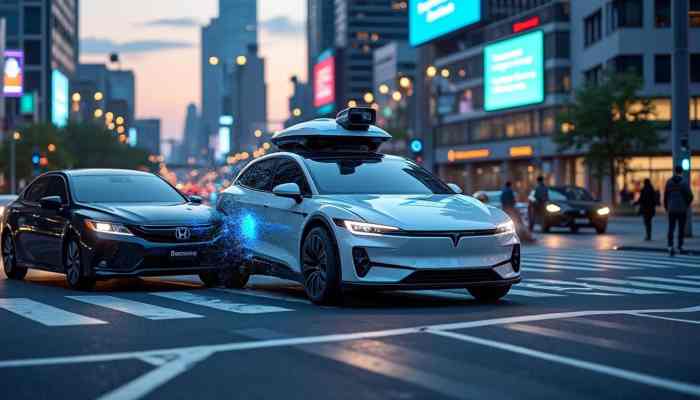
When it comes to self-driving cars, product liability refers to the legal responsibility of manufacturers, designers, or sellers of autonomous vehicle technology for any defects or malfunctions that may lead to accidents or injuries.Product liability cases involving self-driving cars can arise when the autonomous system fails to operate correctly, leading to a collision or other incidents.
For example, if a self-driving car's sensors malfunction and fail to detect a pedestrian crossing the street, resulting in an accident, the manufacturer or designer of the technology could be held liable for the damages.
Examples of Product Liability Cases
- A self-driving car manufacturer faced a lawsuit when their vehicle failed to recognize a stop sign, causing a collision with another vehicle.
- In another case, a self-driving car's software glitch led to a rear-end collision with a human-driven car, resulting in injuries to the occupants.
Challenges in Determining Liability
- One of the main challenges in determining liability in self-driving car accidents is the complex nature of autonomous vehicle technology. It can be difficult to pinpoint whether the accident was caused by a design flaw, a manufacturing defect, or human interaction with the system.
- Additionally, the lack of clear regulations and standards for self-driving cars further complicates the issue of liability. Different jurisdictions may have varying laws regarding autonomous vehicles, making it challenging to establish liability across different regions.
- Furthermore, the involvement of multiple parties, such as the car manufacturer, software developers, and the vehicle owner, can make it challenging to determine who should be held accountable for an accident involving a self-driving car.
Factors Influencing Fault in Self-Driving Car Accidents
Self-driving cars have the potential to revolutionize the way we travel, but accidents involving these vehicles raise questions about liability and fault. Several factors can influence fault in self-driving car accidents, including human error and technology malfunctions.When it comes to accidents involving self-driving cars, one of the key factors to consider is human error.
While autonomous vehicles are designed to operate without human intervention, there are instances where human drivers may still need to take control of the vehicle. In such cases, the question of whether the human driver or the autonomous system is at fault becomes crucial in determining liability.Another important factor in self-driving car accidents is technology malfunctions.
Despite advancements in technology, self-driving cars are not immune to technical glitches or failures
Role of Human Error in Self-Driving Car Accidents
- Human drivers may fail to take control of the vehicle when necessary, leading to accidents.
- Distractions or inattentiveness by human drivers can impact the vehicle's autonomous system.
- Misunderstanding of the capabilities and limitations of self-driving technology can also lead to accidents.
Impact of Technology Malfunctions on Fault Assignment
- Technical glitches such as sensor malfunctions or software errors can result in accidents.
- Connectivity issues or communication failures within the autonomous system can contribute to accidents.
- Determining whether the accident was caused by a technology malfunction or human error is crucial in assigning fault.
Legal Framework for Determining Fault
Determining liability in self-driving car accidents involves a complex legal framework that considers various factors such as the actions of the human driver, the autonomous vehicle technology, and existing laws and regulations.Existing laws are applied to self-driving car accidents based on traditional principles of negligence and product liability.
In cases where a human driver was responsible for the accident, they may be held liable. However, when the autonomous vehicle's technology or software malfunctions, the manufacturer or developer of the self-driving system could be deemed at fault.Challenges arise when adapting legal frameworks to accommodate self-driving technology, as current laws may not always clearly define liability in cases involving autonomous vehicles.
Determining fault in self-driving car accidents requires a careful examination of the circumstances surrounding the incident and a thorough understanding of how autonomous systems operate.
Challenges in Adapting Legal Frameworks
- Existing negligence laws may not adequately address liability when autonomous technology is involved.
- Product liability laws may need to be reevaluated to determine responsibility for accidents caused by self-driving cars.
- The lack of standardized regulations for autonomous vehicles complicates the legal landscape.
- Issues of data privacy and cybersecurity may also impact how liability is determined in self-driving car accidents.
Final Conclusion
In conclusion, the landscape of self-driving car accidents and product liability is intricate, with blurred lines on who is truly at fault. As technology continues to advance, the legal framework will need to adapt to ensure accountability and safety on the roads.
The discussion surrounding fault in self-driving car accidents is far from over, and only time will reveal the full extent of its implications.
Answers to Common Questions
Who is typically responsible in a self-driving car accident?
In most cases, the manufacturer or the company that developed the self-driving technology is held liable for accidents involving autonomous vehicles.
Can human drivers be blamed for accidents involving self-driving cars?
Yes, human drivers can still be at fault if they override the self-driving system or fail to take control when required.
How are product liability cases different in self-driving car accidents?
Product liability cases in self-driving car accidents often involve complex technological aspects and require expertise in both law and engineering.